I am stuck on a mission called Good Intentions. The quest is so hard and
I need to find a person and I have no idea how and I'm not good at
doing those kind of quest. Why are Mage quest so hard. I am also
terrible at useing magic. The only thing I'm good at is archery. I am
going to try to get telekinesis. The only thing I know is that I need to
find the Auger of Dunlain. At the Atronach forge. The Atronach forge is
under The College of Winterhold. I am the listener and a thane of two
places. I really want to be Arch-mage but I don't know how. The award of
this quest is the Mage's Circlet it increases your Magicka by 20-70
points. The Atronach forge is a scary place. I really want to get the
Eye of Magnus. I am totally not going to be a Mage, totally going to be a
Warrior.
Thursday, May 31, 2012

Wednesday, May 30, 2012
Mage or Warrior
I figured out that Mage quest are harder than Warrior quest but Mage quest are more funner and Warrior quest are boring. I got Greater Ward and it's so strong and I forgot were I got it from a ruin I guess.
I am doing a quest called the Good Intentions it is so hard.
After I finish all the main quest in The College of Winterhold I will be a Warrior again.
I really hate bandits I wish I could get one bandit and shoot them with the crossbow whats that Shadowmere Skyrim don't have crossbows stupid Skyrim engineers always disappointing me.
I don't ride on Shadowmere anymore because I always attract Trolls.
Even though Shadowmere has a lot of health.
I don't like to have any followers because they always get in the way Shadowmere to.
I don't like dogs in Skyrim cause all of them look exactly the same!
Why do the Warrior get all the cool stuff and the Mage's get all the boring stuff.
I am doing a quest called the Good Intentions it is so hard.
After I finish all the main quest in The College of Winterhold I will be a Warrior again.
I really hate bandits I wish I could get one bandit and shoot them with the crossbow whats that Shadowmere Skyrim don't have crossbows stupid Skyrim engineers always disappointing me.
I don't ride on Shadowmere anymore because I always attract Trolls.
Even though Shadowmere has a lot of health.
I don't like to have any followers because they always get in the way Shadowmere to.
I don't like dogs in Skyrim cause all of them look exactly the same!
Why do the Warrior get all the cool stuff and the Mage's get all the boring stuff.
Tuesday, May 29, 2012
Mage Stuff
 |
| Ice Wraith |

I might get the Master Destruction robes.
If I get Master Destruction perk and the Master Robes of Destruction I will call my self the Kitty Warlock of Destruction.
I also need to find a Staff.
 |
| Staff of Lightning Bolts |
I have fire spells and lightning spells but no frost spells I hate frost spells.
I'm going to look so cool in the Master Robes of Destruction with the Staff of Lightning Bolts.
Monday, May 28, 2012
Mage Mage Mage Mage Maaaaaaaaaaaggggggggggge Power
 |
| last room |
The last room kind of freaked me out because of the big floating orb just like the one on the picture.
 |
| Jyrik Gauldurson |
Being a Mage is awesome!. Being a Warrior is boring.
The reward for this quest is the Staff of Magelight. Ball of light that lasts 60 seconds and sticks where it strikes.
I really like staffs.
I really don't like my room in The College of Winterhold It looks so weird because I don't want a head of a deer in my room it creeps me out seriously.
I really want to try to get all of the Daedric artifacts. So cool.
 |
| Tolfdir |
 |
| Staff of Magelight |
Sunday, May 27, 2012
Evoluntionary Development
Chimps and humans are 98.6% similar. Humans and Mice are 85% genetically
identical. Evolutionary developmental biology (evolution of development
or informally,
evo-devo) is a field of biology that compares the developmental
processes of
different organisms to determine the ancestral relationship between
them, and to
discover how developmental processes evolved. It addresses the origin
and
evolution of embryonic development; how modifications of development and
developmental processes lead to the production of novel features, such
as the
evolution of feathers; the role of developmental plasticity in
evolution; how ecology impacts in
development and evolutionary change; and the developmental basis of
homoplasy
and homology. Although interest in the relationship between ontogeny and
phylogeny extends
back to the nineteenth century, the contemporary field of evo-devo has
gained
impetus from the discovery of genes regulating embryonic development in
model
organisms. General hypotheses remain hard to test because organisms
differ so
much in shape and form. Nevertheless, it now appears that just as
evolution tends to create new genes
from parts of old genes (molecular economy), evo-devo demonstrates that
evolution alters developmental processes to create new and novel
structures from
the old gene networks (such as bone structures of the jaw deviating to
the
ossicles of the middle ear) or will conserve (molecular economy) a
similar
program in a host of organisms such as eye development genes in
molluscs,
insects, and vertebrates. An early version of recapitulation theory,
also called the biogenetic law or embryological parallelism, was put
forward by Étienne Serres in 1824–26 as what became known as the
"Meckel-Serres Law" which attempted to provide a link between
comparative embryology and a "pattern of unification" in the organic
world. It was supported by Étienne Geoffroy Saint-Hilaire as part of his
ideas of idealism, and became a prominent part of his version of
Lamarckism leading to disagreements with Georges Cuvier. It was widely
supported in the Edinburgh and London schools of higher anatomy around
1830, notably by Robert Edmond Grant, but was opposed by Karl Ernst von
Baer's embryology of divergence in which embryonic parallels only
applied to early stages where the embryo took a general form, after
which more specialised forms diverged from this shared unity in a
branching pattern. The anatomist Richard Owen used this to support his
idealist concept of species as showing the unrolling of a divine plan
from an archetype, and in the 1830s attacked the transmutation of
species proposed by Lamarck, Geoffroy and Grant. Animals are very
similar than we imagine. In the 1850s Owen began to support an
evolutionary view that the history of life was the gradual unfolding of a
teleological divine plan, in a continuous "ordained becoming", with new
species appearing by natural birth. In On the Origin of Species (1859),
Charles Darwin proposed evolution through natural selection, a theory
central to modern biology. Darwin recognised the importance of embryonic
development in the understanding of evolution, and the way in which von
Baer's branching pattern matched his own idea of descent with
modification. Among the more surprising and, perhaps, counterintuitive
(from a neo-Darwinian viewpoint) results of recent research in
evolutionary developmental biology is that the diversity of body plans
and morphology in organisms across many phyla are not necessarily
reflected in diversity at the level of the sequences of genes, including
those of the developmental genetic toolkit and other genes involved in
development. Indeed, as Gerhart and Kirschner have noted, there is an
apparent paradox: "where we most expect to find variation, we find
conservation, a lack of change". The products of Hox genes are known as
Hox proteins. Hox proteins are transcription factors, as they are
capable of binding to specific nucleotide sequences on the DNA called
enhancers where they either activate or repress genes. The same Hox
protein can act as a repressor at one gene and an activator at another.
For example, in flies the protein product of the Hox gene Antennapedia
activates genes that specify the structures of the 2nd thoracic segment,
which contains a leg and a wing, and represses genes involved in eye
and antenna formation. Thus, legs and wings, but not eyes and antennae,
will form wherever the Antennapedia protein is located. The ability of
Hox proteins to bind DNA is conferred by a part of the protein referred
to as the homeodomain. The homeobox is a 180 nucleotide long DNA sequence that encodes a 60 amino acid long protein domain known as the homeodomain. Hox genes are a group of related genes that determine the basic structure and orientation of an organism.
The Mongols and the Nomads
The Mongols conquered more than the Romans, I mean it a lot. The
mongols opened up trade routes. Nomads migrate according to the weather.
Nomads don't generally produce manufactured goods. Nomads generally
live close to nature. Mongols were small. Gengis Khan conquered a lot of
land. Their are 16 million people directly descendant to Gengis Khan.
Salman Khan might be directly descendant to Gengis Khan. A definition
includes the Mongols proper, who can be approximately divided into
the eastern Mongols (the Khalkha Mongols, the Inner Mongolians, the
Buryats),
and the Oirats. In a wider sense, the Mongol people includes all people
who
speak a Mongolic language, such as the Kalmyks of eastern Europe. Gengis
Khans father was poisoned to death. Mongol peasants loved Gengis Khan.
The designation "Mongol" briefly appeared in 8th century records of the Chinese Tang dynasty, describing a tribe of Shiwei, and resurfaced again in the late 11th century during the rule of Khitan. After the fall of Liao Dynasty in 1125, the Mongols became a leading tribe on the steppe and also had power in Northern China. However, their wars with the Jin Dynasty and Tatars had weakened them. In the thirteenth century, the word Mongol grew into an umbrella term for a large group of Mongolic and Turkic tribes united under the rule of Genghis Khan.
The Mongols created nations like Russia and Korea.
The Mongols were amazing at archery.
Mongols are a Central-East Asian ethnic group that lives mainly in the countries of Mongolia, China, and Russia. Owing to wars and migrations, Mongols are also found in some Central Asian states such as Kazakhstan. In China, ethnic Mongols can be found mainly in the central north region of China such as Inner Mongolia (a smaller number of Mongols can also be found in Xinjiang in northwest China). The Buryat branch of the Mongol ethnic group can be found in the autonomous republic of Buryatia, Russia. Ethnic Mongols are bound together by a common language and culture. They speak languages belonging to the Mongolic languages. The contiguous territories inhabited by ethnic Mongols is also known as Greater Mongolia. The Nomads don't go on random Road trips. Gengis Khans most important wife was Kidnapped and his mother to. The rich hated Gengis Khan but it didn't matter anymore because they were no longer rich. Gengis Khan killed his older brother. Gengis khan Conquered lots of people. Everyday It's Gengis's khans Descendants birthday. The Mongols were uncommonly adaptable. Beyond his military accomplishments, Genghis Khan also advanced the Mongol Empire in other ways. He decreed the adoption of the Uyghur script as the Mongol Empire's writing system. He also promoted religious tolerance in the Mongol Empire, and created a unified empire from the nomadic tribes of northeast Asia. Present-day Mongolians regard him as the founding father of Mongolia. Nomads don't trade so much. Kidnapping was common for the mongols. Gengis khan died in his sleep. Gengis khans Grandsons conquered more than Gengis khan. The Mongols were experts at siege warfare by interrogating prisoners. People were terrified of the Mongols often cities would surrender just to escape slaughter. The Mongols really did reinvigorate cross-Eurasian trade. The Mongols increased communication through Eurasia. The Yam system was also called the Ortoo, but was not called Ortoo D2. Another thing that traveled along the Mongol trade routes was cuisine. Gengis Khan failed to create a single political unit out of his conquests. The Mongols split into four just like Alexander's empire. The Mongols valued trade. The Mongols had bronze passport. This is Gengis khans definition of happiness "The greatest happiness is to vanquish your enemies. A definition includes the Mongols proper, who can be approximately divided into the eastern Mongols (the Khalkha Mongols, the Inner Mongolians, the Buryats), and the Oirats. In a wider sense, the Mongol people includes all people who speak a Mongolic language, such as the Kalmyks of eastern Europe.
The designation "Mongol" briefly appeared in 8th century records of the Chinese Tang dynasty, describing a tribe of Shiwei, and resurfaced again in the late 11th century during the rule of Khitan. After the fall of Liao Dynasty in 1125, the Mongols became a leading tribe on the steppe and also had power in Northern China. However, their wars with the Jin Dynasty and Tatars had weakened them. In the thirteenth century, the word Mongol grew into an umbrella term for a large group of Mongolic and Turkic tribes united under the rule of Genghis Khan. In various times Mongols have been equated with the Scythians, the Magog and the Turkic peoples. Based on Chinese historical texts the ancestry of the Mongol peoples can be traced back to the Donghu, a nomadic confederation occupying eastern Mongolia and Manchuria. The identity of the Xiongnu is still debated today. Although some scholars maintain that they were proto-Mongols, the fact that Chinese histories trace certain Turkic tribes from the Xiongnu complicates the issue.
The designation "Mongol" briefly appeared in 8th century records of the Chinese Tang dynasty, describing a tribe of Shiwei, and resurfaced again in the late 11th century during the rule of Khitan. After the fall of Liao Dynasty in 1125, the Mongols became a leading tribe on the steppe and also had power in Northern China. However, their wars with the Jin Dynasty and Tatars had weakened them. In the thirteenth century, the word Mongol grew into an umbrella term for a large group of Mongolic and Turkic tribes united under the rule of Genghis Khan.
The Mongols created nations like Russia and Korea.
The Mongols were amazing at archery.
Mongols are a Central-East Asian ethnic group that lives mainly in the countries of Mongolia, China, and Russia. Owing to wars and migrations, Mongols are also found in some Central Asian states such as Kazakhstan. In China, ethnic Mongols can be found mainly in the central north region of China such as Inner Mongolia (a smaller number of Mongols can also be found in Xinjiang in northwest China). The Buryat branch of the Mongol ethnic group can be found in the autonomous republic of Buryatia, Russia. Ethnic Mongols are bound together by a common language and culture. They speak languages belonging to the Mongolic languages. The contiguous territories inhabited by ethnic Mongols is also known as Greater Mongolia. The Nomads don't go on random Road trips. Gengis Khans most important wife was Kidnapped and his mother to. The rich hated Gengis Khan but it didn't matter anymore because they were no longer rich. Gengis Khan killed his older brother. Gengis khan Conquered lots of people. Everyday It's Gengis's khans Descendants birthday. The Mongols were uncommonly adaptable. Beyond his military accomplishments, Genghis Khan also advanced the Mongol Empire in other ways. He decreed the adoption of the Uyghur script as the Mongol Empire's writing system. He also promoted religious tolerance in the Mongol Empire, and created a unified empire from the nomadic tribes of northeast Asia. Present-day Mongolians regard him as the founding father of Mongolia. Nomads don't trade so much. Kidnapping was common for the mongols. Gengis khan died in his sleep. Gengis khans Grandsons conquered more than Gengis khan. The Mongols were experts at siege warfare by interrogating prisoners. People were terrified of the Mongols often cities would surrender just to escape slaughter. The Mongols really did reinvigorate cross-Eurasian trade. The Mongols increased communication through Eurasia. The Yam system was also called the Ortoo, but was not called Ortoo D2. Another thing that traveled along the Mongol trade routes was cuisine. Gengis Khan failed to create a single political unit out of his conquests. The Mongols split into four just like Alexander's empire. The Mongols valued trade. The Mongols had bronze passport. This is Gengis khans definition of happiness "The greatest happiness is to vanquish your enemies. A definition includes the Mongols proper, who can be approximately divided into the eastern Mongols (the Khalkha Mongols, the Inner Mongolians, the Buryats), and the Oirats. In a wider sense, the Mongol people includes all people who speak a Mongolic language, such as the Kalmyks of eastern Europe.
The designation "Mongol" briefly appeared in 8th century records of the Chinese Tang dynasty, describing a tribe of Shiwei, and resurfaced again in the late 11th century during the rule of Khitan. After the fall of Liao Dynasty in 1125, the Mongols became a leading tribe on the steppe and also had power in Northern China. However, their wars with the Jin Dynasty and Tatars had weakened them. In the thirteenth century, the word Mongol grew into an umbrella term for a large group of Mongolic and Turkic tribes united under the rule of Genghis Khan. In various times Mongols have been equated with the Scythians, the Magog and the Turkic peoples. Based on Chinese historical texts the ancestry of the Mongol peoples can be traced back to the Donghu, a nomadic confederation occupying eastern Mongolia and Manchuria. The identity of the Xiongnu is still debated today. Although some scholars maintain that they were proto-Mongols, the fact that Chinese histories trace certain Turkic tribes from the Xiongnu complicates the issue.
wow!
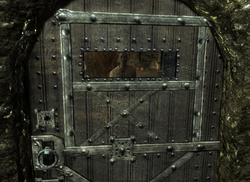 |
| A Cornered Rat (quest). Esbern behind the door |
I also found a secret entrance to the Thieves Guilds place.
 |
| The college of Winterhold |
 |
| College of Winterhold on map. |
 |
| Thieves Guild banner |
I am using lots of fire spells and I'm really good at fighting with them.
Before on my other blog I said I didn't want to join the college of Winterhold but now I change my mind.
 |
| Mace of Malang Bal |
Subscribe to:
Posts (Atom)